Watch Us Grow! | |

Search our Physician Database to find the one that is right for you.

Watch 60 Second Housecall

Every Monday thru Friday

On WTVA at Noon and Ten ...

Make someone's day a little brighter with a hand-delivered e-mail greeting!

Heartfelt Advances

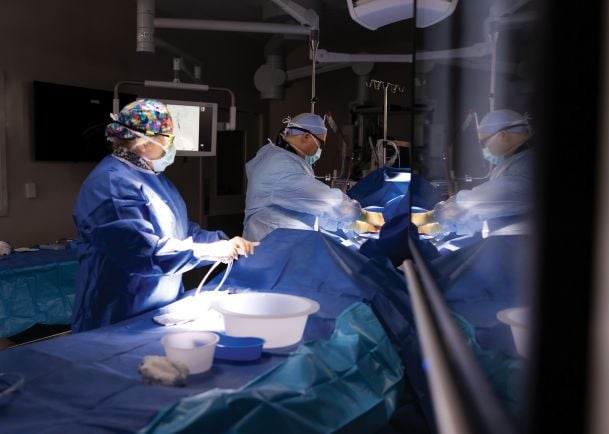
Since its beginning in 1981, NMMC's heart program has grown not only in volume, but also in capabilities.

Ablation Maze Procedure

NMMC was among the first hospitals nationwide to offer the ablation maze procedure. A device placed on the outside of the heart delivers ultrasound energy across the wall of the heart to cause an electrical block in an attempt to stop atrial fibrillation permanently. This technique is used in conjunction with cardiopulmonary bypass during heart surgery or done as a minimally invasive procedure through a small incision.


Advanced Cardiac Mapping

NMMC leads the region in treatment of atrial fibrillation with state-of-the-art ablation techniques and advanced mapping systems to detect complex abnormal heart rhythms. NMMC's electrophysiologists were the first use a new computer-generated, 3-D "virtual heart" to find the spot where odd heartbeats originate. The state-of-the-art cardiac catheter system allows physicians to more quickly and accurately map electrical current inside the hearts of patients who have irregular heart rhythms, known as arrhythmias. The new system allows the physician to move the heart around on the screen in three dimensions and look at it from different sides, from above and below. The new system is a giant leap forward because it gives physicians a clear picture of the heart chamber's electrical activity in only a few beats, which will help identify the exact location of a patient's arrhythmia.


Advanced Lung Center

Launched in 2007, the NMMC Advanced Lung Center uses a multidisciplinary approach to diagnose, treat and provide rehabilitation to patients with lung disease. Pulmonologists, oncologists, thoracic surgeons and support personnel work together to provide a seamless approach for lung patients.

NMMC offers:

  • Radiofrequency Ablation, one of the most promising alternatives to surgical removal of lung tumors. Radiofrequency ablation elimiates the tumor cells using heat, an outpatient procedure that is much less invasive than open surgery. Guided primarily by computed tomography (CT) scanning, a small needle electrode is inserted through the skin and directly into the tumor tissue. The radiofrequency energy causes the tissues around the needle electrode to heat up, killing nearby cancer cells and reducing the risk of bleeding.
  • Pneumonectomy (or pneumectomy). The most common cause for removing all or part of a lung lobe is lung cancer, although it may be used for other lung diseases.
  • Thorascopic lung resection. Complex lung resections, such as removal of a lobe or even the entire lung, are possible through three incisions one centimeter long and an additional four-centimeter incision. By not removing or spreading ribs, and with such small incisions, patients recover much more quickly and with less pain.


ASD/PFO Closure

NMMC cardiologists recently pioneered using the Amplatzer to repair two common heart defects-atrial septum defect (ASD) and patent foramen ovale (PFO). The Amplatzer works much like a button to close a hole in the atrial septum. This is placed using echo and X-ray guidance in the Cardiac Catheterization Lab using small catheters inserted through the leg veins. All patients are required to take aspirin for six months after implantation. The success rate for this procedure to close the hole is the same as open heart surgery but with a much lower complication rate and no scar.


Cardiac CT

NMMC is leading the nation with advancements in using multi-slice computed tomography (CT) technology to diagnose coronary artery disease.


Cardiac MRI

NMMC is among the first in the nation to offer cardiac MRI, a painless, noninvasive test used to examine the size and thickness of the heart chambers and how well the heart is pumping. The tool also allows a physician to determine the extent of damage caused by a myocardial infarction or to evaluate progressive heart disease, including congestive heart failure. MRI may be used to evaluate patients needing Surgical Anterior Ventricular Remodeling (SAVR) surgery to increase the ejection fraction or pump function of the heart.


Cardiac Resynchronization Therapy

NMMC cardiologists were among the first in the nation to use cardiac resynchronization therapy, a new treatment for heart failure that uses an implantable device to improve the heart's pumping capacity. The left ventricle is the most important pumping chamber of the heart and normally contracts in synchrony to move blood through the body. However, in many patients with heart failure, the electrical impulses that coordinate the heart's contractions are sluggish. The right side of the heart is pumping while the left side is still waiting for an electrical impulse. As a result of the time delay, the patient's heart does not squeeze well.

This disorganized beating can worsen symptoms of heart failure, which include shortness of breath, fatigue, and swelling of the feet and ankles. While medications and dietary and lifestyle modifications are helpful, the growing population with advanced heart failure was left with no further options until now.


Drug Eluting Stents

NMMC offers drug coated stents, which reduce the incidence of reblockage by more than 90 percent compared with a traditional bare metal stent.


Endoscopic Vein Harvest

NMMC cardiothoracic surgeons use this minimally invasive procedure to harvest the greater saphenous vein in the leg for coronary artery bypass surgery. Because this procedure uses only a 2 cm incision, these patients have less pain, fewer complications and recover faster.


4-D Echocardiography

NMMC's echocardiography laboratory uses a cardiac ultrasound system providing real-time, four-dimensional images of the heart. This innovation allows cardiologists and surgeons to view the heart as if they were holding it in their hands and helps physicians better diagnose cardiac problems. The image can be manipulated by changing the angle, looking down into the heart or looking up through the bottom of the heart with amazingly detailed pictures.


Impella

Doctors at NMMC are using Impella technology to help support poorly functioning hearts during cardiac procedures. The Impella is a powerful pump that replicates the heart’s natural function, continuously uploading the left ventricle and propelling blood into the ascending aorta. Through the patient’s groin, doctors insert a catheter, which is like a short straw with this miniaturized heart pump attached to the end. One end goes in the left ventricle and the other end goes into the ascending aorta, with a motor located in the middle. The Impella basically sucks blood in one end and blows it out the other end.

Before the Impella technology was introduced, doctors relied on balloon pumps during risky catheterization procedures. A balloon pump produces a much lower blood volume—only 1.8 liters per minute versus 5 liters per minute with the Impella. The higher volume increases blood perfusion to the heart and other organs. Patients are slowly weaned off the Impella after the procedure. At NMMC, Impella technology can be used by interventional cardiologists in the Cardiac Catheterization Laboratory and by cardiothoracic surgeons in the operating room.


Mini-Valve Procedure

The mini-valve procedure allows NMMC cardiothoracic surgeons to perform a mitral valve repair/replacement or aortic valve repair/ replacement through a three-inch incision. These patients have fewer complications, decreased blood loss and a quicker recovery.


830 South Gloster Street

Tupelo, MS 38801

NMMC Electrophysiology Lab