
Breast Reconstruction
Breast reconstruction is a personalized process that helps restore breast shape and contour following mastectomy. Reconstruction can be performed at the time of mastectomy or as a separate procedure later, depending on your treatment plan, overall health and cancer care needs.
At North Mississippi Plastic Surgery, breast reconstruction is approached as a journey rather than a single procedure. Reconstruction often occurs in multiple stages over several months and may involve tissue expanders, implants, your own tissue or a combination of techniques.
Our team works closely with your breast surgeon and oncology team to create a plan that supports both your cancer treatment and your long-term goals.
What is breast reconstruction?
Breast reconstruction is a series of procedures that rebuild the breast following mastectomy. Reconstruction may begin immediately during the same surgery as the mastectomy or may be delayed until a later date.
Timing options
Immediate reconstruction
Immediate reconstruction begins at the time of mastectomy and can often provide the best cosmetic outcome when appropriate. However, factors such as smoking history, skin quality and surgical safety may affect whether immediate reconstruction is recommended.
Delayed reconstruction
Delayed reconstruction begins during a separate surgery after the mastectomy. In some situations, delayed reconstruction may provide the safest path forward.
Understanding Your Reconstruction Options
Breast reconstruction is not one-size-fits-all. Your surgeon will help determine which approach aligns with your anatomy, cancer treatment plan and personal goals.
Implant-Based Reconstruction
Implant-based reconstruction is the most common form of breast reconstruction and uses tissue expanders, implants and acellular dermal matrix (ADM) to recreate breast shape. ADM serves as a scaffold that supports your body's natural tissue growth and can provide additional coverage around tissue expanders and implants.

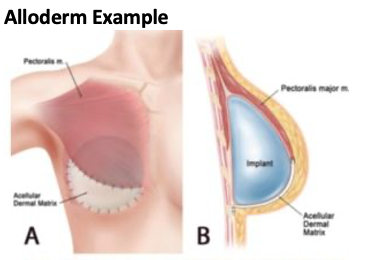
Hybrid Reconstruction
Some patients benefit from a combination approach that uses both implants and their own tissue. One common example uses the latissimus dorsi muscle from the back along with a tissue expander or implant.
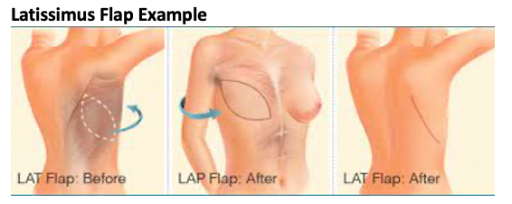
This technique may be recommended for delayed reconstruction, prior reconstruction complications or patients who require radiation therapy.
Autologous Reconstruction
Autologous reconstruction uses your own tissue to rebuild the breast. In general, these approaches may better tolerate radiation or infection-related challenges than implant-only reconstruction.
What to Expect During the Reconstruction Process
Stage 1: Tissue Expanders
For many patients, reconstruction begins with placement of tissue expanders during or after mastectomy. Tissue expanders create space for a future implant reconstruction.
After surgery, expansion typically begins about two to three weeks later and continues until the desired breast size is achieved.
Most patients stay overnight in the hospital after first-stage reconstruction.
Stage 2: Permanent Implant Placement
The second major stage usually occurs three to six months later. During this procedure, tissue expanders are exchanged for permanent implants and adjustments may be made to improve breast shape and contour. Fat grafting is often performed at the same time to improve fullness and appearance.
This stage is generally performed as outpatient surgery, allowing patients to return home the same day.
Stage 3: Nipple Reconstruction
Nipple reconstruction is often performed about three months after implant placement and is typically completed in a procedure room while awake.
Stage 4: Nipple-Areola Tattooing
Tattooing can help recreate the natural appearance of the areola and is often completed several months after nipple reconstruction.
Recovery & Healing
Recovery varies depending on the stage of reconstruction and technique used.
In general, patients can expect:
- Temporary lifting restrictions
- Activity modifications during healing
- Follow-up appointments for expansion and monitoring
- Multiple stages over several months
Many first-stage reconstruction procedures involve surgical drains for one to two weeks following surgery.
Risks and safety considerations
All surgery carries risk. Specific risks associated with breast reconstruction may include:
- Wound-healing problems
- Infection
- Tissue expander or implant complications
- Seroma or fluid collections
- Capsular contracture
- Implant malposition or asymmetry
- Skin or flap healing concerns
- Risks associated with anesthesia, including blood clots
Your surgeon will discuss how these risks apply to your individual situation and reconstruction plan.
Preparing for surgery
Smoking & Nicotine Use
Nicotine significantly affects blood flow and healing. Patients are required to stop smoking and avoid nicotine products before and after reconstruction. Testing may be performed to confirm nicotine cessation because nicotine use can increase the risk of wound-healing problems, infection and reconstruction failure.
Cancer Treatment Planning
Breast reconstruction is coordinated with your breast cancer treatment plan. Recommendations may vary depending on cancer type, treatment timing, radiation needs and surgical considerations.
Frequently Asked Questions About Breast Reconstruction

What Recovery Really Looks Like After Plastic Surgery


Why a Strong Support System Improves Plastic Surgery Results
What Recovery Really Looks Like After Plastic Surgery

Why a Strong Support System Improves Plastic Surgery Results