Feb 19 2026
Meal Prep Made Simple
Summary
Eating well doesn’t have to be complicated or time consuming. A little planning can save time, money and stress while making healthy meals easier all week long.
Meal prep is simply preparing food ahead of time so eating well is easier during the week.
Meal prep offers many benefits:
- Ensures more balanced meals and better nutrition
- Improves health
- Promotes weight loss
- Saves time
- Saves money
- Reduces waste
Step 1: Decide Your Prep Style
Choose one method to start. Decide which meal would be most convenient to be pre-prepared for you ahead of time.
There are two ways to address meal prepping:
- Complete prep is great for busy weeks and convenient work lunches. This method involves batch-preparing a meal with all components and portioning individual servings into containers for quick grab-and-go meals (for example, chicken with rice and veggies).
- Component prep offers more variety and less weeknight cooking. This method involves preparing a protein and sides with the ingredients you need to create several different dishes. This approach is more flexible. For example, you might prepare chicken and rice to use with stir-fry vegetables one night, then combine chicken and black beans in a tortilla another night.
Step 2: Keep it Simple by Choosing 2 Proteins, 2 Veggies & 1 Carb
Keep it simple.
Proteins
- Chicken breasts or thighs
- Ground beef or turkey
- Eggs
- Salmon
- Tofu or beans
Veggies
- Broccoli
- Green beans
- Peppers and onions
- Carrots
- Zucchini
Carbs
- Rice
- Potatoes or sweet potatoes
- Pasta
- Quinoa
- Tortillas
Step 3: Grocery Shop with a Short List
Shop after you decide your meals. Take into account which ingredients you already have on hand, then prepare your list.
Step 4: Prep in This Order (Efficiency Matters)
- Start with carbs (rice, potatoes)
- Get proteins cooking (bake, grill or use a slow cooker)
- Roast or sauté vegetables
- Prep raw items last (fruit, salads, snacks)
Step 5: Simplify the Seasoning
Keep seasoning on proteins and sides simple for more versatility. After cooking, if you plan to do complete meal prep, you can add seasonings or sauces once the ingredients are combined. This might look like taco seasoning, sauce or salsa, Tzatziki for Mediterranean dishes or soy sauce for Asian-inspired meals.
Step 6: Assembly
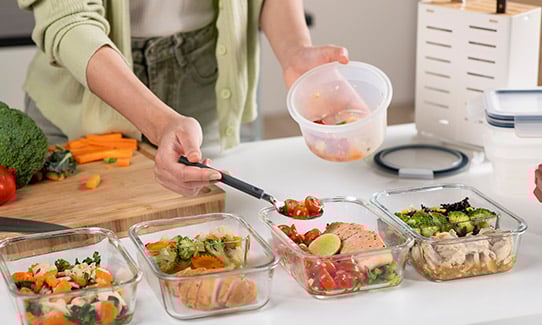
Clear containers help prevent food from being forgotten, as well as help with portion control. Depending on the dish, it may be best to keep sauces separate, especially for meals like salads. For best quality, limit refrigeration time to three to four days. Freezing extra portions is always an option for the weeks ahead.
Some Assembly Required – Meal Prep Ideas
Turn the same prep into different meals for better variety:
- Bowl: Protein + rice + veggies + sauce
- Wrap: Protein + veggies + tortilla
- Salad: Greens + protein + roasted veggies
- Quick dinner: Reheat protein + frozen veggies
Snack Prep Ideas
Prepped snacks help prevent grazing, takeout and vending machine trips. Keep easy, grab-and-go options on hand. Try to choose pre-portioned snacks to support mindful and fueling choices.
- Nature's pre-packaged food (apples, oranges, bananas or prewashed and bagged fruit)
- Greek yogurt
- Cheese sticks
- Hummus + veggies
- Hard-boiled eggs
- Pre-portioned nuts
Common Meal Prep Mistakes
Start small. Avoid trying too many recipes or recipes with long ingredient lists. Prep foods you enjoy and avoid eating the same bland meals repeatedly.

Emily Littlejohn, MS, RD, LD
Emily Littlejohn, MS, RD, LD, is a registered dietitian with NMMC’s Population Health Department. Emily holds bachelor’s and master’s degrees in food and nutrition services from the University of Mississippi. She offers nutrition counseling by appointment at the North Mississippi Wellness Center in Tupelo. Call (662) 377-7803 for more information.

MyChart (also known as myConnection)
Schedule your next appointment, start an E-visit, communicate with your doctor, request prescription refills and access your test results — just a click away.
Topics
- Healthy Lifestyles