May 12 2026
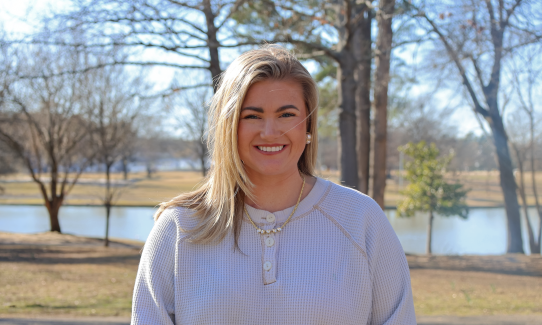
A Young Life Restored: Priscilla's Story
Summary
After years of unexplained gastrointestinal symptoms and declining health, Priscilla Hathcock finally found the diagnosis and treatment that changed her life.
For nearly a decade, Priscilla Hathcock of Smithville lived in a body that wouldn’t cooperate, living with symptoms no one could fully explain.
What began as eating difficulties evolved into a series of health crises. Today, after an accurate diagnosis and the right treatment, Priscilla says she finally has her life back.
Early Symptoms
Around 2016 Priscilla began having trouble eating. “I struggled to keep food down, and then when I got it down, everything would come back up,” she says. Despite gastrointestinal workups, for years she was given no answers and told her issue was likely related to anxiety.
In 2017, Priscilla experienced a traumatic brain injury while playing high school softball. Over the next few years, she recovered with minor side effects.
A Medical Crisis
In 2022, when she was eight months pregnant, Priscilla woke up one morning with alarming symptoms. “I woke up and everything was gray and fuzzy,” she says. “My face drew up and I wasn’t able to speak.”
Doctors initially suspected Bell’s palsy or a stroke. Both were ruled out.
On Sept. 14 of that year, Priscilla delivered her son, Hayes, via emergency C-section. “After I delivered him, things got progressively worse,” she recalls.
Declining Health
Priscilla continued experiencing significant vision changes and was referred to Vanderbilt University in Nashville. She received multiple IV infusions and medications for what was believed to be optic neuritis and functional neurological disorder. Unfortunately, her condition did not improve.
She sought another opinion and in June 2024 was diagnosed with multiple sclerosis.
By that point, Priscilla’s physical decline had become severe. “Everything on my right side had gotten progressively weaker,” she says. “I became dependent on a walker or cane at some point of every day.”
When Eating Became Dangerous
To help regain strength, Priscilla participated in outpatient physical and speech therapy.
“My swallowing issues got to the point where I was choking when I would try to eat,” she says. “My speech therapist put me on a thick liquid diet, but I still had issues, so my diet was changed to thin liquids only.”
Because her nutrition was so limited, her strength continued to decline. “I had to avoid engaging in long conversations because I would get so out of breath and worn out,” Priscilla says. “All of my muscles were just kind of deteriorating.”
The Test That Changed Everything
Priscilla’s neurologist referred her for a swallow study at North Mississippi Medical Center Gilmore-Amory. Immediately, she sensed something was awry. “I could tell by looking at the radiologist that something was wrong,” she says. “I know a bad news face.”
After a follow-up CT scan, Priscilla was referred to Cardiothoracic and Vascular Surgery Clinic in Tupelo, where vascular surgeon Dr. Joey Stinson identified the real culprit.
Dr. Stinson diagnosed Priscilla with aberrant right subclavian artery, a rare congenital vascular anomaly affecting only about 0.5 to 2% of the population. In this condition, a major artery that normally branches off the aorta is in an unusual position. Instead of taking the usual path in front of the esophagus, it passes behind it, compressing the esophagus and making it difficult to swallow.
While some people with the anomaly never experience symptoms, Priscilla’s MS intensified its effects.
A Life-Altering Surgery
On Aug. 20, 2025, Dr. Stinson performed surgery to reimplant the artery into its intended position. Surgery relieved the pressure and allowed Priscilla’s esophagus to work normally again.
“I am very fortunate that Dr. Stinson is trained to do this procedure,” she says. “It’s so specialized that not many surgeons do it. He had mentioned he had only done very few.”
Finally, her body began to heal.
She can now eat solid food, something she hadn’t been able to do in many years. “Today I can eat whatever I want, and the strength on my right side has been completely restored to what it was before my brain injury,” Priscilla says. “Now I’m as strong on my right side as I am on my left side.”
Getting Her Life Back
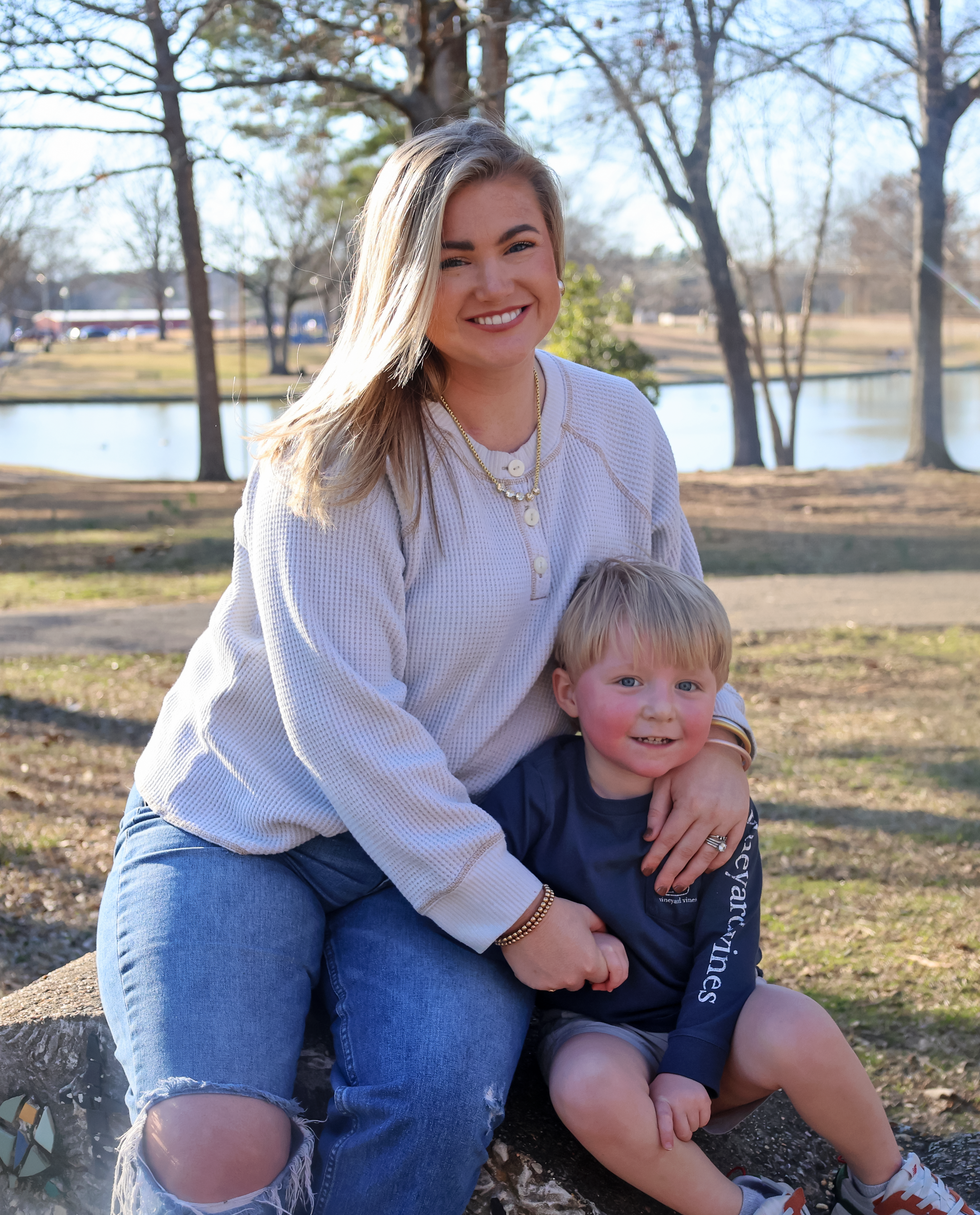
Before surgery, Priscilla’s health severely limited what she could do. “I was always out of breath. I couldn’t go outside with Hayes and play for long periods of time without having to sit down and rest due to be so fatigued and out of breath,” she says. “Now, I can jump on the trampoline with Hayes or walk down to the creek by our house and play as long as I want.”
Thanks to a team that refused to give up, Priscilla’s not only has her health restored, but also her life.
Priscilla's Story


MyChart (also known as myConnection)
Schedule your next appointment, start an E-visit, communicate with your doctor, request prescription refills and access your test results — just a click away.
Related Links
Topics
- Patient Stories