Apr 27 2026
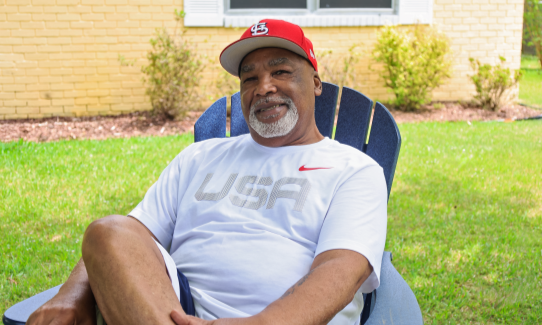
How Johnie Legrone Got His Groove Back
Summary
After living with back pain for more than 40 years, Johnie Legrone thought giving up his favorite activities was inevitable until a minimally invasive surgery helped him regain his mobility, stamina and joy.
For decades, chronic back pain limited Johnie Legrone’s life.
“I’ve been hurting for 40-plus years,” said Johnie, a retired U.S. Postal Service employee with 36 years of service. “But about eight years ago it all just came to a head.”
Because of his back, the 72-year-old from Columbus could no longer play golf or do other activities he once enjoyed. “If I tried to dance, I couldn’t even finish a song because of my back,” he said. “I used to travel a lot, but I had stopped because I always felt like I was holding everybody up when I’d have to sit down and rest. At one point, I was even having to use a walker.”
Trying Everything, But Still Hurting
Johnie tried pain injections, physical therapy, occupational therapy, chiropractic care and different types of shoes. “I tried everything they thought might help me,” he said. “I guess it just broke me down as I got older.”
For several years, he saw pain management specialists at North Mississippi Regional Pain Consultants in Tupelo. While treatment helped manage some symptoms, the pain never fully went away.
Seeking Answers for Recurring Pain
That changed when pain management specialist Dr. Jimmy Windham referred him to a neurosurgeon with North Mississippi Neurosurgical Services, which is also part of North Mississippi Health Services’ Neuroscience Institute.
Johnie had spinal stenosis, a condition that occurs when space in the lumbar spine becomes too narrow. The spinal canal is the tunnel that runs through each of the vertebrae in your spine. When it narrows, blood flow is cut off to the nerves that travel through it, which causes pain when you stand and walk.
People like Johnie, who were once quite active, gradually get to the point where they can't walk very far at all without sitting down.
When Surgery is the Best Option
Most physicians recommend starting with conservative measures like physical therapy and epidural steroid injections. Surgery is always the last option, but for some people like Johnie, it turns out to the be right one.
In January, Johnie had a minimally invasive procedure at North Mississippi Surgery Center in Tupelo. Through a small, one-inch incision in Johnie’s back, the neurosurgeon opened the bony canals and created more space for the spinal cord and nerves to move freely. The procedure takes about an hour. Shortly thereafter, Johnie was up walking the halls.
Faster Recovery & Relief
Because it’s a short procedure with a small incision and very little blood loss, patients recover very well. They go home the same day of surgery and are encouraged to resume light activity soon.
For Johnie, results were noticeable right away. “The surgery did what he said it was going to do,” Johnie said. “My stamina has increased, and I can do more than I used to.”

MyChart (also known as myConnection)
Schedule your next appointment, start an E-visit, communicate with your doctor, request prescription refills and access your test results — just a click away.
Related Links
Topics
- Patient Stories
Share
North Mississippi Neuroscience Institute can help. Call (662) 377-PAIN (7246) for more information or request an appointment online.


Subscribe to Our Newsletter
Like this content and want to get more? Sign up for True North, the health and wellness newsletter from North Mississippi Health Services!
Subscribe to Our Newsletter
Like this content and want to get more? Sign up for True North, the health and wellness newsletter from North Mississippi Health Services!

Nurse Link®
Not sure if you need Urgent Care or the ER? Call 1-800-882-6274 anytime to speak directly to a registered nurse and get immediate answers. Using computerized medical protocols, nurses direct callers to the most appropriate treatment. Our nurses are available 24 hours per day, seven days per week.